
Slow and Steady
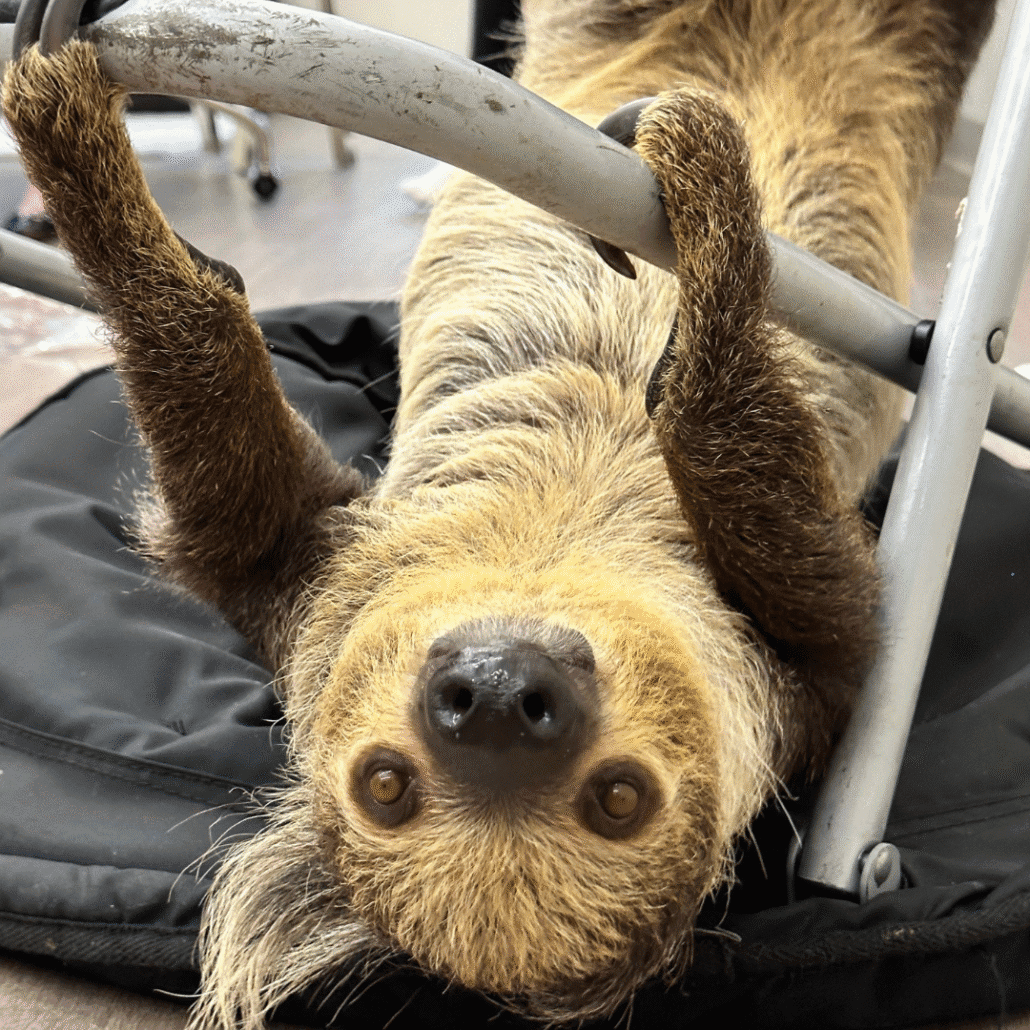
Sloths are remarkable for their ability to conserve energy, with a slow heartbeat, low body temperature and one of the lowest metabolic rates among mammals. They live primarily in Central and South America. Their diet is minimal, typically munching high fiber leaves and fruit from the treetops. They sleep hanging upside down, calling upon a uniquely strong combination of tendons and ligaments that literally lock in place and allow them to maintain their relaxed state despite gravity.
When a sloth baby is born, it remains attached to the mother for roughly six months. The mother clings to the tree branch, and the baby clings to mom’s thick fur. This embracing posture is something we work on at Thrive, often with the use of an exercise ball, to assist with the further integration of our Moro reflex.
Moro, as you might recall, is a primitive reflex in two parts. Often, we think of ‘fight or flight’ when examining the first of these two these movements. The startle or fling of the body with an unexpected stimulus is the first, with the cling, or embrace, the second half that helps us regulate and return to stability and a state of calm. The exchange also calls upon the balance of our sympathetic nervous system (react) and our parasympathetic nervous system (regulate).
Roxy serves as an example of a dominant parasympathetic nervous system, which we commonly associate with our body’s ability to rest and digest, among other automatic processes. Our sloth friends are exceptionally good at regulating stress in this state. With our own sloth-like RMTi exercises, we’re stimulating the parasympathetic nervous system and regulating overactive fight or flight behavior, to support the integration of Moro. The exercise of clinging or hugging reduces the release of cortisol in the brain. It also produces the feel-good hormone oxytocin, which in turn reduces stress and lowers blood pressure.
Roxy’s joy-filled visits remind us of the dynamic connections between our brains and our behavior.