
Classroom Confidence
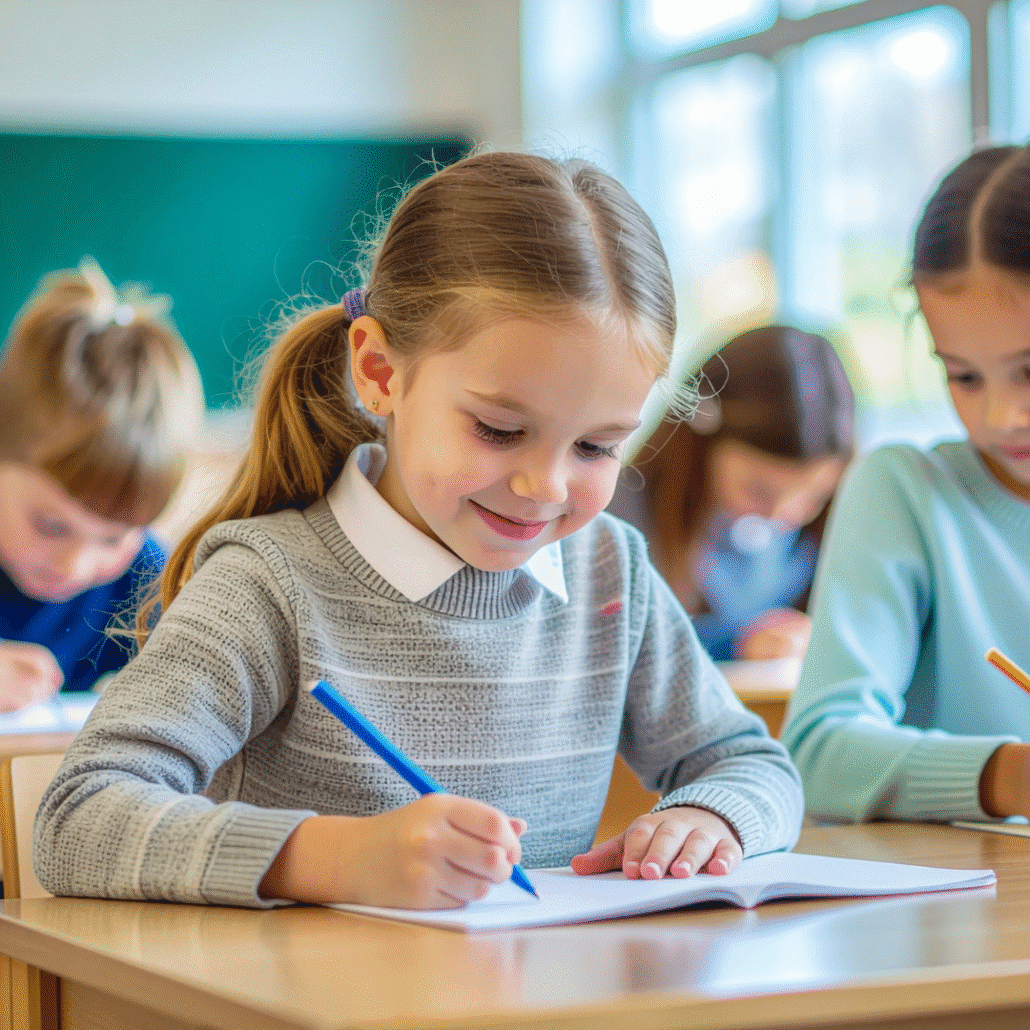
We often refer to early education as foundational. Children unlock the ability to learn through reading and the ability to express themselves through writing. Their skills continue to build year over year, as subject knowledge broadens and more complex dynamics like test taking and group project work elevate their ability to problem solve, plan and organize. Confidence in reading and writing truly paves the way for social, emotional and behavioral success into adulthood.
Learning to read and learning to write both require an understanding of the body’s two hemispheres, unlocked through the integration of several early reflexes. As the two sides of the body learn to work in tandem, binocular vision develops into the ability to track objects like words on a page. As reflexes fine-tune neural pathways, grasping movements solidify the fine motor skills required to hold instruments and draw letters. The ability for children to remain attentive, focused and cooperative in a classroom setting is closely connected to the integration of our primitive reflexes.
This fall I’m pleased to offer Level 3 RMTi: Reading and Writing, an advanced two-day workshop where we’ll focus on how reflex integration impacts our visual and auditory systems. We’ll examine more deeply how these systems contribute to success in the classroom and how rhythmic movement therapy may support challenges with reading and writing.

