
Bedwetting and Our Reflexes

According to the American Academy of Child and Adolescent Psychiatry (AACAP), 20% of five-year-olds and 10% of seven-year-olds experience nocturnal enuresis, or frequent bedwetting issues. While the age range for toilet training varies, it’s widely thought that bladder control is something that may not develop fully until age seven. 

While bedwetting has been attributed to a number of causes across research, from anxiety and ADHD to a genetic predisposition, the primary biological issue is the body’s inability to feel when the bladder is full. When nerves that control the bladder are slow to mature and muscle tone in the region remains low, a child’s brain may not receive those bathroom signals while in a deep sleep.

Our reflexes emerge and integrate during our early months of infancy to help us grow and develop. These movements are purposeful, teaching survival skills from navigation to balance, from understanding threats to exploration. Our reflexes help us as to find food, build attachments and ultimately live independently. Among the many systems impacted by our reflexes are those that expel waste (bladder, bowels).

The Spinal Galant reflex, which emerges with sensations along the spine on the lower back, is closely aligned to the delicate nerve endings that support bladder function. That’s why, when testing a newborn, strokes on the lower back to the waist will almost always result in a release of urine. As Spinal Galant, the side-to-side movement from the hips, strengthens and integrates, so does the nerve and muscle tone that supports bladder function and control.

When addressing bedwetting, there are a number of easy tips available to parents, from controlling evening fluid intake and eliminating caffeine to moisture alarms that help a child wake at the onset of a leak. Plastic mattress covers, nightlights in bathrooms and handy clean clothes may help rough nights but ultimately, the root of the issue needs to be addressed to see progress toward a dry, sound sleep. 

By identifying an active Spinal Galant reflex, and working on targeted rhythmic movement exercises to support its integration, the bladder will also be supported and strengthened. Along the way, it’s important for parents, caretakers and siblings to understand this is something most children cannot control. Avoid reward systems as much as shameful language along this journey. Instead, empower your child to play a role in understanding their body and the movements that work to support their development overall.

When Travel Isn’t Fun

For some, it’s the bobbing of a boat that leads to a persistent lightheaded and queasy feeling. The sensation of takeoff or landing while seated on an airplane, or perhaps the twists and turns of a windy car ride, might set off cold sweats and pallor. While it’s challenging to prevent, understanding how motion sickness is connected to our vestibular system may provide insight as we prepare for summer travel. 

Our vestibular system is housed within our inner ear, consisting of sensory organs filled with fluid. Three semicircular canals react to our body’s movement, side to side, up and down or right and left. The fluid shifts against tiny hair cell receptors and sends signals to the central nervous system to keep the body in balance against shifts in movement. A mature system is able to move without getting sick, an immature system is what causes the motion sickness. TLR is what creates the mature foundation for sensory processing of forward and backwards motion.

The vestibular system is the anchor for all sensory systems. A well-established vestibular system with be able to communicate with the visual system and proprioceptive system to understand the sensory experience. An immature vestibular system will cause motion sickness. Our sensory input from our eyes and our muscles and joints combines to inform the system. Oftentimes, travelers experience mixed signals in their body as they sit on moving vessels like planes, boats and cars. The disconnect between what we see and what we feel or don’t feel alerts those autonomic (and sickly) reactions. Interestingly, virtual reality and other immersive games result in similar challenges, since participants experience a moving environment while oftentimes limited in their own movement.

Our reflexes play a major role in creating the foundation for a mature vestibular system, which supports our balance and awareness of our movement within our surroundings.  Compensation strategies for immature systems suggest focusing on fixed objects may help travelers feel less sick (eyes on the horizon while on a boat, sitting in the front of the car and looking at the dashboard, for example). Natural remedies like pressurized wrist bands and chewing ginger help to mask nausea as well. 

Rooted in the Earth

Grounding is a purposeful practice within yoga that supports our feeling of stability, or rooting, to the Earth. Grounding poses include any position where we connect our body to the ground below. Warrior II or even the simple standing Mountain Pose, for example, offer two powerful opportunities for our feet to touch the earth and our minds to feel secure and centered. 

When grounding, we send energy downward, putting pressure on the soles of our feet from our heels to our toe pads. We might imagine growing deep roots, as if we’re a tree.  In yoga, we wiggle our toes to feel them as distinct and we stand tall in the energetic connection to the Earth. In Child’s Pose or even in Downward Dog, we spread our fingers wide and channel that energy downward through our palms.  In a sense, we’re employing our reflexes in our hands and feet to create these grounding sensations. It’s the curling and extending movements that enable us to channel that energy, while at the same time feeling safe in our own bodies in the present.

We often hear about chakras from yogis as well. The root chakra, located at the base of the spine, is thought to be aligned to our sense of safety and stability. It brings to mind how our symphony of reflexes works together to create our sense of connection and place in the world. 

When we practice exercises in a Thrive session, we’re building upon our earliest reflex movements to support a greater sense of our awareness of our bodies and their capabilities. Just as yoga encourages presence of mind, I encourage my clients to be aware of how they feel as they move. I’m supporting the feeling of being grounded, of knowing yourself and your unique and special place in this world.

No Longer Frozen

“Here I stand, and here I’ll stay. The cold never bothered me anyway…”

Sound familiar? The global phenomenon and power ballad from Disney’s 2013 hit Frozentells a powerful tale of a princess learning to accept her past and her powers, letting go of her fear and finding empowerment through self-acceptance. Living authentically is a wonderful theme to introduce to children, yet possible only when a sense of security enables that confidence. 

Consider this lyrical verse: “Conceal, don’t feel. Don’t let them know…”. At the beginning of the movie and the song, Elsa describes a life where she was afraid to act. She hesitated to reveal her capabilities or to even connect with her family. This is actually fear paralysis at work. In her resistance, she’s showing a strong desire to withdraw. Thinking about our Babkin reflex, the ability to truly let go from our embrace (our cling of Moro) is not present. When our defensive reflexes are active, it is hard to feel safe in our connections to others and the world around us. 
 

The song “Let It Go” plays such an important role in the Disney movie, capturing Elsa’s character development from moments of isolation to soaring anthems that can’t help but make viewers cheer. As part of our therapeutic practice at Thrive, we involve our clients in a journey of knowing themselves from the inside out. We foster agency by allowing choices where they make sense. Clients decide their movement plan within the parameters that fit their needs. Through a greater self-awareness comes the ability to regulate feelings, find self-acceptance and a healthy release. Let it Go!

Forming Connections

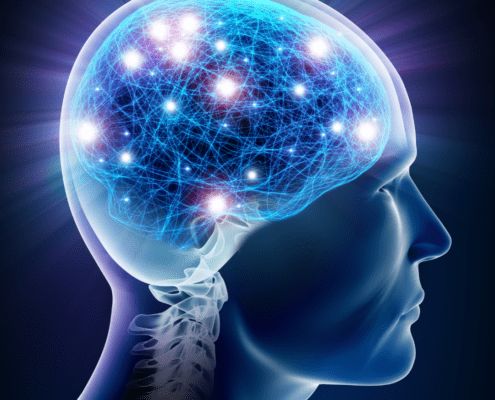
As connections to the higher parts of the brain form, pathways are established and reinforced. The cerebellum, home to nearly 70% of those neurons, plays a role in organizing those early primitive movements upwards from the brain stem. The better we build on these connections, the more we gain control over our movement. By encouraging exploration through practice, we’re helping children to learn coordination in their movement. Higher connections, like those to the prefrontal cortex and basal ganglia, come later, enabling us to act with more focus and consistency. 

The structures that make up our brain never work in isolation and it’s important to create strong connections that reinforce how each work together. Poor connections to parts of our brain may result in aggressive behavior or the inability to process sensory information effectively. Speech and language, as well the ability to maintain focus and attention, are two areas that are also highly reliant on neural linkages.

In the Palm of our Hand

The Infant Palmar reflex is an early grasping reflex where the fingers of an infant curl inward when the inside of the hand is touched. This reflex is closely associated with the Moro’s cling stage, helping find calm through embrace. Infants often hold tight not only to adult fingers but beloved objects to self-sooth. The hands also open and close as an infant’s suck reflex activates, demonstrating a close connection between grasping and our developing articulation and connection with others. Our hands have the power to send signals of safety and security to our brain through their grasping movement. 

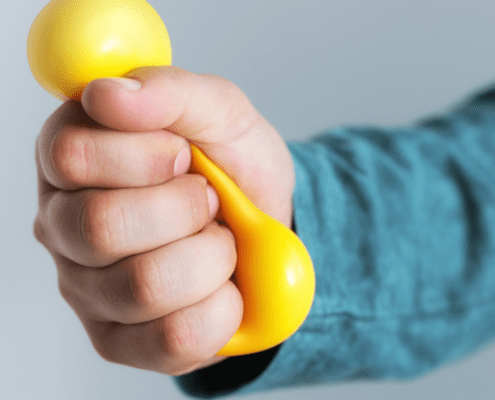
Squeezing a soft, pliable ball may be a temporary outlet for nervous energy, the repetitive sensory distraction a helpful resource during brief moments of stress. Fidget spinners emerged as another small, portable device for those dealing with anxiety, ADHD and some autism disorders by providing a focal point along with the pleasing sensory experience. The idea behind calming strips is similar, redirecting focus with new sensory input designed to stimulate nerve endings on the fingers that in turn sends calming signals to the brain. 

While these resources may offer effective soothing tactics for the short-term management of social and emotional challenges, it’s important to identify and work on the root causes for behavioral patterns. At Thrive Therapy, our ultimate goal is always to empower our clients to understand themselves better and unlock practices that not only manage but reinforce positive development. By practicing rhythmic movements that support connections to the brain, we’re training our bodies to deal with stress from within.

The Power of a Hug

Oxytocin is produced in the hypothalamus and stored in the pituitary gland at the base of the brain. As not only a hormone but a neurotransmitter, it’s released by electric signals from parts of our body back and forth to our brain. As one of the few hormones that function off a positive feedback loop, the release of oxytocin stimulates even more to be released from the pituitary gland. Oxytocin has an important physical function in the labor process, as the baby’s downward pressure initiates oxytocin-induced contractions that aid in childbirth. The hormone is also responsible for lactation, signaling the release of milk when an infant begins to suck.
 

The “love hormone” is commonly associated with positive emotions, supporting healthy social interactions in a number of ways. Oxytocin in released with physical touch like hugging and cuddling, which in turn triggers feelings of attraction and attachment. When a parent offers a newborn skin to skin contact, the release of oxytocin triggers powerful feelings of attachment and that bond tell the infant she is safe. Oxytocin has an important behavioral role, helping us build trust through recognition and contributing to our ability to make safe, healthy connections with others. 
 

When we think of our friend Roxy the Sloth and the cling stage of the Moro reflex, we’re reminded that oxytocin helps balance the stress-induced hormone cortisol with calming regulation. It is released as part of relaxation response mechanisms from the parasympathetic nervous system. The feeling of stability and support associated with this oxytocin may also play a role in lowering anxiety and other social and emotional challenges. 

Winter Lights

Responsible for coordinating the dynamic shifts in our body’s physical and mental systems, our circadian rhythms move through a natural daily cycle governed by light exposure.  The circadian ‘clock’ is really the coordination of over 20,000 nerve cells within our brain’s hypothalamus. Our circadian rhythms are not only responsible for guiding our sleep-wake cycle but also impact our body’s immune system, hormonal balance, cellular repair and overall cognition. 

These rhythms are perhaps most noticeable when daylight savings time forces a shift in our waking hours. As we experience the winter season, we’re again exposed to less light in our days. According to a Huberman Lab podcast, factors like jet lag and screen time (and blue light) also disrupt the timing of our light exposure, which can lead to sleep deprivation and a decline in cognitive functioning. Our wakefulness happens with a release of the hormone cortisol and epinephrine from our adrenal glands. The cycle begins, and follows several hours later with the body’s release of melatonin. By optimizing light exposure early in the day, we’re ensuring our hormonal wakefulness and sleepiness signals set us up for good health.  

I start each day with a special alarm clock that simulates the sun rising. By turning on the lights in my home, I’m signaling to my brain that it’s time to be alert. This is a particularly helpful practice this time of year, when it’s often dark outside when we wake. I find this practice more potent than a cup of coffee. After around 3pm, I slowly dim our lights, shifting from overhead exposure to lamp-lit rooms. 

I encourage you and your family to start light rituals at the beginning and end of the day, to help decompress and prepare our bodies for restorative sleep and to reinvigorate our brains when we wake.

The podcast episode I referenced is “Master Your Sleep & Be More Alert When Awake” from Huberman Labs Essentials. For books about circadian rhythms and our body’s natural clock, I recommend The Inner Clock by Lynne Peeples and The Circadian Code, by Satchin Panda, Phd.

Published Research on Improved Classroom Outcomes

Developmental immaturities, and reflexes that fail to integrate within the first twelve months of life, may lead to educational challenges for children when they reach classroom age. Right now, we’re beginning to see linkages between infants born during or after the pandemic and a reduction in cognitive function, likely due to stress and retained primitive reflexes. Powerful research is emerging around this topic. 

According to a 2023 study published in the Journal of Neurology & Experimental Neuroscience, students may benefit significantly by the incorporation of rhythmic movements in a classroom setting. Over a ten-month period, the study found that a statistically significant increase in reading scores across a group of children ranging from six to eight years of age. The children were divided into two groups, with the test group participating in RMT exercises for five minutes at least four times weekly.

As infants mature and children grow, their primitive reflexes integrate and are replaced by cognition and active choice. Movement pathways are the key to this integration, and the exercises selected for this classroom-based study targeted the cerebellum for its support in attention and concentration. 

Feedback from the teachers participating in this New Zealand-based school study was remarkable. The test students all showed signs of improved confidence, participation and interactivity with the reading work. Not only were reading scores improved, but steady, sometimes larger than normal, jumps in progress were reported. 

RMTi is extremely beneficial for young students struggling with classroom activities. When it comes to MAP scores and other methods for measuring progress, proper developmental milestones need to be met in tandem with coursework challenges. By incorporating key movements into a young student’s week, their learning will not only improve but just may soar.

JOIN ME to learn more about exercises like those in this study, that support focus and academic success.

Know Thyself. The Role of Interoception in Therapy

Elizabeth Hickman is traveling to Canada, taking the critical work of Thrive Therapy in Elmhurst to Montreal alongside somatic therapist Karen Hargot.

We’ll explore foundations for learning and development in the nervous system through a practice called reflex integration, taught for the first time locally in English. This course is open to those looking to know themselves more deeply, as well as those working with others in a therapeutic setting.

The RMTi workshop calls upon rhythmic movement to address unintegrated reflexes and has impactful results in strengthening those connections and building stronger neurological foundations. The practice simulates what a baby does in the first year of their life and in-utero, yet is impactful to clients of all ages. By rewinding back to early-stage movements, this therapy can more deeply address reflexes that were underdeveloped due to trauma or developmental detours.

Join Elizabeth as she explores the fundamentals of reflex and our body’s response system, and embark on an important step in a client’s overall therapeutic journey.