
Unlocking the Inner Athlete

The next batter steps up and swings, sending the baseball sailing straight out to center field. Oliver stood at third, watchful and prepared to sprint to home base. His team needed the run but his legs felt stiff, almost stuck to the plate. By the time he willed himself to move, his shuffling gate couldn’t accelerate fast enough to outrun the ball.

Oliver was frustrated. He felt he wasn’t reaching his full potential on the playing field. In practice, he couldn’t lunge without knee pain and his tight hamstrings severely limited his range and flexibility. He knew he needed therapeutic support, but when he found Thrive Therapy, he unlocked another level of body awareness.

When Elizabeth met Oliver and his mother, she learned that he was born three weeks early and struggled with a tongue tie that led to latching issues and, as he developed, challenges with speech and articulation. His mother shared that he was a bit of a restless boy, always needing movement. Through his evaluation, they learned the connection between his immature reflexes and his physical frustrations.

Oliver suffered from an underdeveloped amphibian reflex, which often leads to weakness in various muscle groups that contribute to efficient gait patterns. The lack of coordination between the hip, knee and ankle joints often results in compensating behavior, and consequently pain in place of productive gross motor movements. Elizabeth worked with Oliver on integrating his still-immature More reflex, as well as his Spinal Galant, Landau, ATNR and STNR. All of these contribute to the emergence of the Amphibian reflex.

As Oliver balanced school and sports with every-other week sessions at Thrive, he started to see relief in his knee pain, and a reduction in the frequent headaches he would experience following exertion. Elizabeth helped Oliver to understand the link between movement and his visual and vestibular system. Through the rhythmic movement exercises, extending from his head and neck down to his footwork, his Amphibian reflex was able to develop and establish itself, creating a more balanced gross motor system. 

Today, Oliver continues to work on his reflex integration through exercises before games, at home and in periodic sessions at Thrive. His coaches have confidence in his growing athleticism on the field, putting him in the key center infield position to make plays.

The Power of Choice

In the therapeutic world, allowing a client agency enhances their engagement in sessions and empowers them to embrace interoception and the feeling of self-awareness. By choosing anything, from a seat in the room to the starting exercise, a client becomes more directly invested in the work. I sincerely believe that therapy is a partnership and progress is an outcome mutually met. In every session, I allow space for choice and pause throughout to allow for rest, reflection and if needed, redirection. I’m encouraging my clients to take stock of their own body cues. 

Breaking down choice a bit, we look at the interplay of reason and emotion in our brains. Decision-making and problem solving are housed in the prefrontal cortex, while the limbic system draws in emotional drivers like pleasure and reward. When we choose, we’re taking a conscious leap. Several factors influence choice, with a feeling of safety and self-preservation being among the primary drivers.

For those that experience inertia and indecision, defensive reflexes may be responsible. Fear paralysis and Moro reflexes, when not fully integrated, create mental barriers and a feeling of being ‘stuck’ that often prevents confident decision making.  Independence, self-initiative and a sensation of safety in exploration all develop with the integration of our earliest reflexes. The neurological connections that strengthen with those reflexes, especially in our prefrontal cortex, reinforce the ability to choose confidently. 

When we employ RMTi, we’re reinforcing that integration through movement while allowing for a more present, participating self. Our upcoming workshops not only model exercises that support our reflexes but also the purposeful role of choice in therapy.

Taking the Initiative

Amelia’s mom had trouble getting her out the door in the morning. Her clothing was too tight, too loose, scratched her back with uncomfortable tags. She hated the feel of a toothbrush in her mouth and she resisted anyone brushing her hair. Even going to the bathroom felt scary, smelly and gross.

From an early age, Amelia’s path was never a smooth one, her mom recalled. She struggled as an infant to self-sooth, and when she woke at night, she could not easily fall back to sleep. She’d work herself up in tantrums, failing to calm easily. If her family went out to eat, Amelia would recoil and curl into the corner of the booth, overstimulated and exhausted from the loud noises around her.

Seeking OT resources online for Amelia’s sensory challenges, her mom learned about primitive reflexes. She noticed a mom’s group referencing Thrive. Unlike larger therapy groups, she said, the idea that Elizabeth both owned and led the practice was more than appealing. Curious, she decided to first sign up for a Thrive workshop, where the concepts behind RMTi came into focus.

Amelia entered her evaluation at Thrive with hesitation and resistance. She didn’t want to go. Like brushing her teeth, she was scared, nervous and refused to make eye contact. When Elizabeth allowed her choice in her session, she froze. Did she want the lights on? Did she like working on the rug? Amelia wasn’t sure what to trust.

For Elizabeth, it was clear that her indecision and anxiety stemmed from immature reflexes, most prominently her defensive reflexes. Amelia’s Fear Paralysis and Moro made sensations heightened and she ran from uncertain environments and touch with fear. Early sessions focused on movements that helped her find greater safety with tactile, vestibular, proprioceptive and auditory sensory stimuli. Since an immature Moro prevents the emergence of the Landau reflex, Amelia had been hesitant to explore her world away from mom. With work toward integrating Moro and Landau, her metaphoric confidence in decision making, especially on her own, started to increase.

Amelia’s first few sessions, at age 10, helped create a sense of calm that her mother hadn’t seen before. Social situations that gave her anxiety seemed manageable. Her mom saw that she was able to enter school, and new environments, with more confidence. She was making decisions on her own, even requesting cooking classes on her own this summer. The changes have been empowering and encouraging for everyone.

“Any sort of social situation used to give her such anxiety,” Amelia’s mother recalls. “Now, she’s better able to navigate those situations on her own.”

Peak Performance

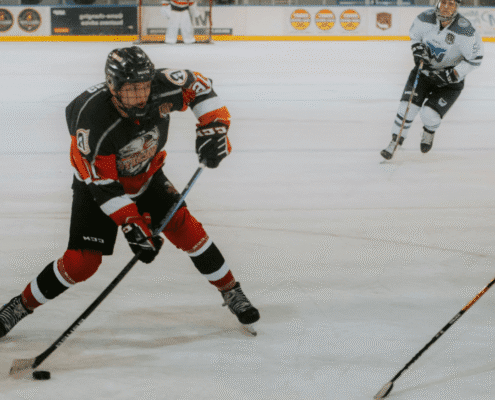
As a hockey player, Danny had to scan the ice, shifting his perspective from the big picture to his own position in a matter of moments before striking. Danny felt pressure to play well, and his adrenaline was clouding his vision. When his body failed to settle down, he made hasty plays and mistakes. He came at the puck with unbridled force.

When he turned to RMTi for support, it was clear that his right and left-brain connections were weak. As a child, Danny barely crawled before walking, his coordination struggling in the prone position and his active Moro driving his fight or flight. With less time strengthening his crawling movements, his cross-lateral brain connections and his ATNR remained immature. Ultimately, Elizabeth noted, this impacted his visual tracking and processing. Danny’s peripheral vision, his ability to truly scan the field as an effective player and most importantly, to maintain calm and control under moments of stress, were related to those active reflexes.

Danny found the therapy work was exactly what his body craved. Cross-lateral movement exercises before games, often from the bench, helped him feel calm, grounded and dialed in. He practiced eye tracking movements that supported the type of scanning he needed as a player on the field. For Danny, a sensation of being alert yet calm filled him with confidence. He became a play-maker and by his sophomore year, his performance paid off with a spot on the Varsity hockey team. 

By applying movements that support the integration of his primitive reflexes, particularly those supporting his vestibular system and visual motor systems, Danny not only found improved athletic performance but coping mechanisms that transferred to other areas of his life. He approached his classwork and relationships with presence and a better ability to balance. His work helped to calm his nervous system and form important connections in his body.

If you’re interested in understanding how reflex integration impacts athletic performance and an athlete’s mindset, reach out here and consider attending one of our upcoming workshops. 

Our Vestibular System and Moro

Lily’s day was filled with moments of fear and uncertainty. The changing table was a physical battle with her parents from the moment she was placed on her back. Car rides were nightmares, with Lily’s mom trying desperately to reach around and calm her with snacks. From the moment she was buckled in, she wailed.  Bathtime was filled with dread, as Lily refused to tilt her head back for an effective wash. She fought the entire time. 

As daily activities were met with fear and dysregulation, Lily’s parents sought solutions and explored sensory support. Her teachers at daycare held her tight as she battled through severe meltdowns and her parents trudged through countless moments of chaos throughout the day. When the family found Thrive, they learned that those moments triggered by an immature vestibular system. For Lily, many of the positions that cause alarm called upon unintegrated TLR backward reflexes. Her defensive reflexes reacted with panic and alarm.  

Elizabeth quickly identified her Moro reactions, stemming from the unintegrated TLR reflex, in Lily’s evaluation. The vestibular system, responsible for a feeling of balance and stability in moments of movement, is something that has been linked to fear of falling, fear of heights and motion sickness when not fully in sync. The movement, particular backward head movements, are processed by the vestibular system. When Lily would swing on the playground, much like riding in a car, her experience of the backward turn in motion sent her into fight or flight mode. 

“All of these little things clicked for me when we started working with Elizabeth. I never really noticed or attributed them to reflexes before,” recalls her mother, who gained a greater understanding of her daughter’s behavior through Thrive.

As she moved through life, Lily’s Moro was in overdrive. Her limbs extended outward always, and she favored walking on her toes. Criss-crossed legs felt unnatural. Car seats, with the forward-backward movement of a vehicle in motion, felt threatening from her harnessed position and compounded her discomfort. Tilting her head backwards in the bath activated Moro and the backward tilt of her neck activated her TLR reflex.

Through Lily’s work at Thrive, she’s gained more mobility in her body and a greater sense of control that’s replaced her fear with a feeling safety. Joyful activities like swinging back and forth on the playground are no longer moments of discomfort. She’s able to lay back and allow her diaper to be changed without a struggle.  When it’s time for her weekly sessions at Thrive, she’s walking in with flat feet and riding home in a quiet car.

Finding Calm in the Storm

Hank was a passionate baby, his mother lovingly recalls. His laugh was infectious and when he was happy, he was a boisterous and playful little child. When he was angry, though, he was more than mad. There was truly no middle ground as Hank struggled with emotional regulation.

Hank’s inconsolable tantrums started around age two. He rejected hugs, threw toys and more often than not, wound up hitting his body against a wall or the side of his crib. He would lash out with biting. Hours long jags got so bad that his parents had to pad his crib.

“We had a hard time keeping him safe,” said Hank’s mother of his frightening moments of self-harm. “Anything we did would only agitate him more.”

As time went on, his reactions impacted his sleep. Hank would often wake with night terrors. He would require earphones to tolerate the sound of the espresso maker in the morning, as distress extended from night back into day.

Hank’s mother, an Occupational Therapist, tried every sensory processing strategy she knew without progress. When an outpatient OT working with Hank explored retained reflexes, they saw simple exercises prove challenging and, in his frustration, further dysregulating. That’s when the family knew they needed a specialist like Elizabeth.

“She was so helpful explaining the science behind all of the reflexes, and even some things we could start doing at home,” she says of a phone call with Elizabeth while Hank was on the waitlist for his full evaluation. The family was eager to dig in.

Once Hank began his weekly sessions, it was clear that he was living with an extremely active Fear Paralysis and Moro. His need to smash his mouth or bite was an attempt at oral self-soothing, something he struggled with since losing his pacifier. Elizabeth led Hank slowly through the work, recognizing his Moro required a gentle path toward safety. Within the first week of work, Hank’s meltdowns went from nine or more a day to only a few a week. He slept through the night almost immediately after the evaluation. 

Most significantly, Hank was not biting nor was he hurting himself physically while upset. He was starting to process his emotions, name them and begin the path to regulation. His mother recalls a day not too far into the sessions when she looked down from the same espresso machine and saw her son, without headphones and within inches of the noisy machine. He looked up and asked, mommy, are you making your coffee? The moment was so special for the progress it meant for them both.

Finding His Voice

Even when Charlie finally broke ground, suddenly speaking dozens of words over the course of a week, his progress would be a rollercoaster of tremendous gains and long plateaus. His parents watched as his developmental progressions always brought him back to a place of silent anxiety and frustration. When he entered school, Charlie would gnaw on everything that he could find. He chewed pens, crayons, even puzzle pieces. He was constantly putting objects in his mouth.

Charlie’s parents sought resources without success. They visited multiple doctors and therapists and no one could offer insight into Charlie’s challenges. Then, the family was introduced to Thrive Therapy. 

Elizabeth explained that we explore the world as a newborn using our mouth to assess and learn, gaining safety along the way. Root/ Suck, one of our grasping reflexes, teaches the tongue through early movement that eventually assists in proper articulation. 

For Charlie, his fear paralysis was still active, which among other forms of withdrawal can cause a shutdown of the larynx. He was unable to draw upon his voice to express himself. Oftentimes, we see babies rely on pacifiers as a behavior that soothes the parasympathetic nervous system in times of distress. Charlie was mouthing throughout the day in an effort to calm himself. 

Elizabeth worked with Charlie in sessions supporting the integration of his defensive reflexes. By helping to bring in the parasympathetic nervous system, the limbic system can approach calm. Charlie’s parents even attended one of Elizabeth’s workshops to learn the foundations for rhythmic movement therapy so they might reinforce his movements at home. 

Recently, Charlie’s gym teacher met with his parents. He was amazed by the changes in Charlie’s patience, attentiveness and most of all, his ability to express himself. When a new skill was introduced, Charlie stepped back before thoughtfully approaching the teacher. He explained that he didn’t quite understand the technique and he wanted to learn more in order to join in. He was asking for help. He was using his voice to participate in his world and he was loving it. 

Charlie adores the adventure of travel and embraces new things with curiosity. Today, he’s asking his mom to sign up for afterschool STEAM programs, swimming and running. He’s approaching new things with confidence.

A child’s speech and language development may be impacted when primitive grasping reflexes remain active, especially those related to the mouth like Root/Suck. Defensive reflexes and fear paralysis in particular may contribute to selective mutism and feeling a lack of safety and security. 

Calming our Defensive Reflexes

Emma was on edge, taking in the world around her with more than caution. Her eyes were darting, fearful and overwhelmed by everything around her. Noises were too much and she felt everything deeply. 

From 11 months of age, Emma had been shuttled between therapists and appointments. Her weeks were packed with up to ten therapy sessions, many of them a long car ride from home. Still, no one could explain fearful behavior, her tension. Emma’s parents struggled with naps, which were a routine battle for their overstimulated daughter. Her body simply would not relax.

Emma had support in the classroom, but conferences were met with concern. Every morning, she cried at drop off and counted the hours until she returned to her mom. At school, Emma was constantly revved up, prone to outbursts and overstimulation. She required frequent sensory breaks. Then, Emma found Thrive. Her mom was introduced to an acquaintance who suggested she might have delayed primitive reflexes. She was referred to a specialist nearby: Elizabeth Hickman.

“We had literally hundreds of appointments and no one was able to give me anywhere near the comfort and the understanding that Elizabeth has,” says Emma’s mom of discovering Thrive two years ago. “She was the first person to make sense of all of her history. It all started coming together.”

Elizabeth worked with Emma on calming her system and shaped her once weekly sessions around addressing her active defensive reflexes. Emma’s parents practiced rhythmic movement exercises at home, building on her weekly sessions and lessons they learned after attending a Thrive workshop. Slowly but surely, Emma found calm. Her mother watched in amazement as her child’s alert system was able to relax. To see their daughter, comforted to the point of dozing off after a Thrive session was a welcome new milestone.

Last fall, Emma’s mom sat in on a very different parent-teacher conference. Over and over again, her teachers echoed their amazement for this gifted child. She’s doing phenomenally, they said. She asks questions and waits patiently for help. Her problem solving is grade levels ahead. She is comfortable in her own skin.

When a child experiences overstimulation, prone to outbursts and has trouble self-soothing, both fear paralysis and Moro are active. Driven by the over-production of adrenaline, they are literally stuck in ‘fight or flight’ mode, as the body has not yet learned to reset to a place of calm and a feeling of safety. 

The Power of Cross-Body Connections

Twelve-year-old Leo has been going to Thrive since June 2023, working with Elizabeth on a number of areas of development. As a child that used to refuse school and withdraw from activities, he’s shown tremendous progress while working on integrating his defensive reflexes. 

From an early age, Leo has also worn bifocals and was diagnosed with a form of convergent eye deviation called accommodative esotropia. The strong lenses were put in place to help his eye muscles better work in tandem, but the routine ophthalmologist visits had been bleak. Each time, they’d hear his eyes were the same, sometimes worse.

Elizabeth has been incorporating new exercises into Leo’s sessions, focused on cross-body midline movements that impact eye tracking and teaming. This work calls upon Leo’s vestibular system with head movements that support balance, coordination and his visual motor development. 

After a recent visit to the ophthalmologist, Leo’s mom reached out with good news:

“He was lit up. For the first time ever, his eyes weren’t the same or worse. The exercises were making his eyes stronger.”

For this first time since his diagnosis at age 5, his eyes are showing signs of improvement. In fact, this means Leo may now even be a candidate for contacts, a reality that’s very exciting for him!

The eyes, tongue, hands and feet are the last parts of our bodies to develop refined movements. Crossing movements and coordination exercises create the foundation for those fine motor movements. Simple yet powerful movements, like wiper blade motion, helps to rehearse and integrate these reflexes. 

Leo’s work at Thrive has unlocked his interest in golf and tennis for the first time, as he explores new ways to move his body with confidence. In fact, the work at Thrive Therapy has unlocked Leo’s ability to tie his own shoes for the first time in his life.  

The vestibular system helps with balance, coordination and spatial awareness. From daily tasks like tying a shoe and sitting upright to swinging a golf club, the reflexes that help us be successful in those activities may be underdeveloped and benefit from consistent cross midline exercises.

Breaking Down School Refusal

Leo would not get out of the car. He was always a bit shy and definitely the quieter twin, but Leo’s mom saw a change in his daily behavior around age 10. On bad days, he resisted school with all his might, often physically unable to get out of the car at drop off. Drum lessons, family outings to a restaurant, any activity outside the home was met with refusal. For Leo, the noises were so loud and the lights were so bright. His family watched his struggle to connect and make new friends. 

Leo’s mom remembers when they first started at Thrive Therapy. Her son was frustrated and he was ready for help. Elizabeth met him with understanding and exercises that quickly tapped into the immaturities in his defensive reflexes. Withdrawal, or retreating behavior, like Leo experienced when leaving home is a sign of fear paralysis. His session with Elizabeth calmed him.

“After the first visit, I just knew it was good. He wanted to go back. He loved it there,” says Leo’s mom. “When he left, he was happy. He would never refuse a trip to Thrive and for me, it was a sign that it was working.”

After 12 weeks, Leo met his first set of goals and showed massive strides. He bravely walked into school each day and even started interacting with his friends more deeply. With his weekly sessions, his isolating behaviors started to diminish and his confidence grew. 

Today, Leo is preparing for a performance at the local children’s theater. He’s ready to shine on stage, singing and dancing with his tap shoes. He’s asking to go out to eat and has a growing group of friends. 

“We’ve seen considerable improvement in a lot of different areas for him,” says Leo’s mom, who continues to bring him to Thrive every other week. “I’m excited to see what more he can unlock.”